
Equipment
- 1 Heavy Bottom Pot Do not use Aluminum or Cooper Pots
- 1 Collinder
- Cheesecloth
Ingredients
- 1 Gallong Milk. DO NOT USE ULTRA PASTEURIZED (UHT)
- 1/2 Cup White Vinegar 5% Acidity DO NOT USE CLEANING VINEGAR
- 1/2 tsp salt NO iodine
- 6-8 Tbls Heavy Cream
Instructions
- Pour 1 gallon of whole milk into a large pot. Heat over medium-high until it reaches 185°F to 190°F. The milk should be steaming heavily and right at a simmer, but not boiling. Remove the pot completely from the heat source
- Add the acid: Immediately pour in 1/2 cup of white vinegar. Give the milk a slow, gentle swirl with a spoon. The milk will instantly separate into fluffy white curds and a yellowish liquid whey. Cover with a lid and let it sit undisturbed for 10 to 15 minutes to finish separating
- Drain the whey: Pour the mixture carefully into a large colander lined with two layers of quality cheesecloth. Let the warm whey drain naturally into the sink for 1 to 2 minutes. Do not squeeze or press the curds.
- Shock and rinse: Gather the four corners of the cheesecloth to form a loose pouch. Submerge the entire pouch straight into a large bowl filled with ice-cold water. Gently swish it up and down like a giant tea bag for about 30 seconds. This stops the residual cooking instantly and washes away any remaining vinegar film without breaking up the delicate, fragile curds.
- Final drain: Lift the cheesecloth pouch out of the ice water, give it a very gentle squeeze to release trapped liquid, and let it sit or hang in the colander to drain completely for 15 minutes.
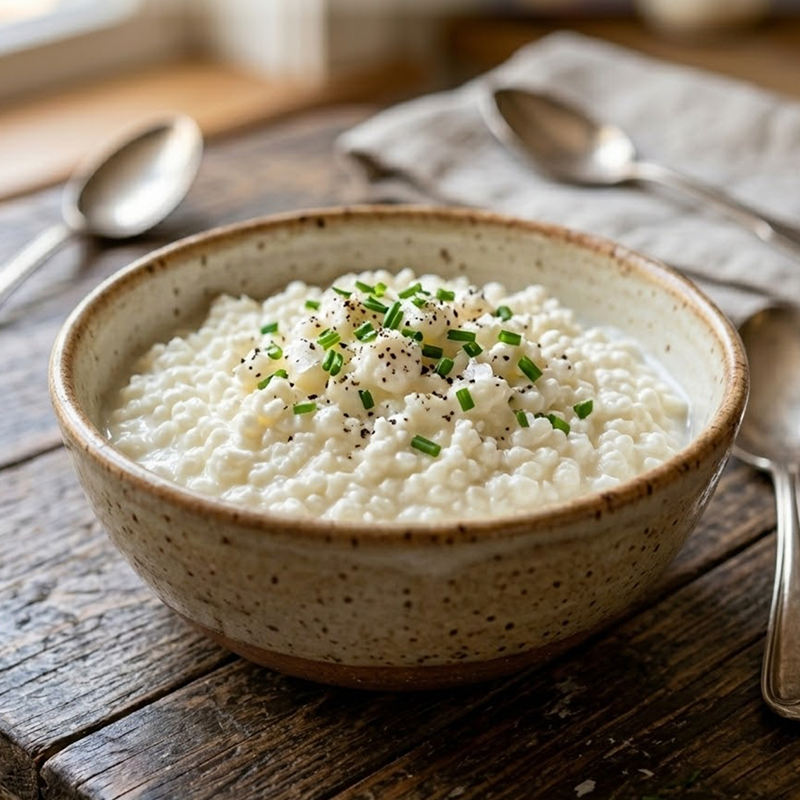
- Dress the cheese: Transfer the dry curds to a clean bowl. Add 1/2 tsp of sea salt and 6 to 8 tablespoons of cold heavy cream. Fold together with extreme gentleness using a spoon so you don't mash or paste the fine curds.
Video
Notes
- Nutritional Disclaimer: Please note that the provided nutrition facts are calculated strictly for the plain, dry curds and do not include any added heavy whipping cream or alternative liquid dressings. If you choose to dress your cottage cheese for extra creaminess, be sure to track those additional ingredients separately based on your personal dietary goals.
- The Best Type of Milk to Use: For the absolute best yield and flavor, use high-quality standard pasteurized whole milk. Avoid using ultra-pasteurized (UP) or ultra-high temperature (UHT) milk. The high-heat processing used in UHT milk damages the proteins to the point where they cannot form a solid curd structure, meaning your cheese will not set properly. If you have access to fresh, high-quality raw milk from a trusted source, it works beautifully for both methods!
- How to Properly Store Your Cheese: Homemade cottage cheese lacks the commercial preservatives, stabilizer gums, and thickeners found in store-bought tubs, making proper storage essential. Store your finished cheese in a clean, airtight glass jar or container. To maximize freshness, store the container upside down in the refrigerator; this creates a slight vacuum seal at the lid and helps slow down the growth of surface bacteria.
- Shelf Life in the Fridge: Because this is a fresh cheese with zero preservatives, it will keep well in the coldest part of your refrigerator for 5 to 7 days. Always use a perfectly clean spoon every time you scoop some out to prevent cross-contamination, which can cause the fresh dairy to spoil prematurely. If you notice any off-smells, mold, or an excessively sour separation of liquid, it's time to discard it.
Nutrition
Serving: 0.5Cup | Calories: 120kcal | Carbohydrates: 3.8g | Protein: 12g | Fat: 6g | Net Carbs: 3.8g
Tried this recipe?Mention @2krazyketos or tag #2krazyketos!
Recent Posts